Geotechnical Engineering in Longueuil

Together, we solve the challenges of tomorrow.

LEARN MORE →

A six-storey residential project on Chemin de Chambly hit refusal at 2.4 metres during excavation. The contractor assumed competent till. Instead, we found a buried soft clay lens typical of the former Champlain Sea deposits that underlie much of Longueuil. That find changed the entire foundation strategy. A soil mechanics study in this city means dealing with the real stratigraphy — sensitive marine clays, occasional silt seams, and groundwater that fluctuates with the Saint Lawrence River. Our lab on the South Shore runs the full suite: triaxial shear, consolidation, and Atterberg limits. We deliver parameters the structural engineer can use immediately, not generic textbook values. For deeper profiles, we often combine sampling with CPT testing to map clay sensitivity before specifying the excavation support.

Longueuil's Champlain Sea clay loses most of its strength when disturbed. Sample quality dictates whether your foundation design is safe or optimistic.
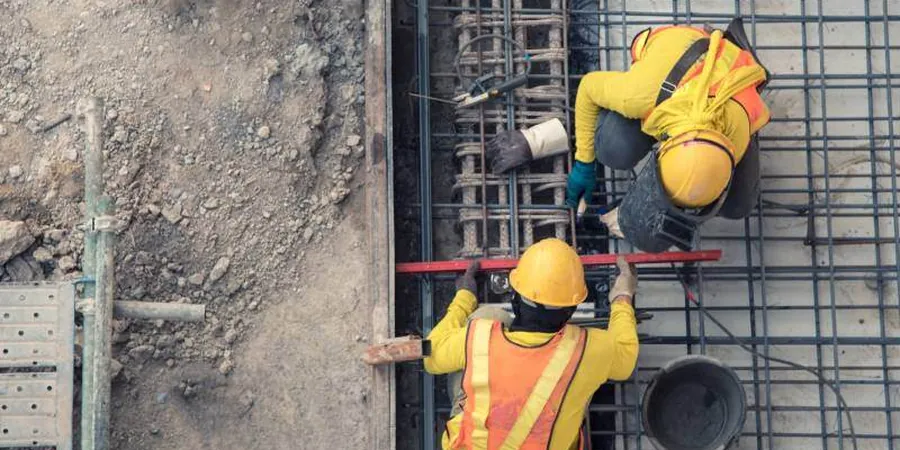
Geotechnical Engineering in Longueuil
Technical reference image — Longueuil

Methodology and scope

The Shelby tube sampler is the workhorse here. It pushes into the clay with minimal disturbance, preserving the natural structure we need for accurate testing. Longueuil's marine clay can lose 60 percent of its strength when remolded, so sample quality is everything. We run unconsolidated undrained triaxial tests within 48 hours of extraction. Oedometer tests follow, measuring compression index and preconsolidation pressure — critical numbers for settlement calculation in the Vieux-Longueuil area where older buildings sit on shallow footings near new construction. For granular layers encountered below the clay, we switch to split spoon sampling and run grain size analysis plus Proctor compaction tests if the material will be reused as engineered fill.

Local considerations

Part 4 of the NBCC 2020 and CSA A23.3 govern structural design, but the seismic hazard in Longueuil — moderate, with a 2 percent in 50-year PGA around 0.25g — makes site class determination essential. Soft clay profiles push the site class to E or even F in NBCC Table 4.1.8.4.A, amplifying spectral accelerations by a factor of 2 or more compared to rock. The wrong site class means underestimated seismic loads. We also check liquefaction susceptibility in the sandy silts sometimes found at depth near the river. The 2011 revision to the NBC introduced stricter provisions for sensitive clays after failures in Eastern Canada. Skipping a proper soil mechanics study here is not a cost-saving measure. It is a liability.

Need a geotechnical assessment?

Reply within 24h.

Email: contact@geotechnical-engineering.org

Technical parameters

ParameterTypical value
Undrained shear strength (Su)15 to 65 kPa in intact clay
Sensitivity (St)10 to >40 (quick clay potential)
Preconsolidation pressure (Pc)80 to 250 kPa typical
Compression index (Cc)0.3 to 0.9
Natural water content40 to 80 percent
Liquid limit45 to 75 percent
Plasticity index20 to 45 percent

Associated technical services

01

Triaxial Shear Testing

UU, CU, and CD triaxial tests on undisturbed Shelby tube samples to determine shear strength parameters for bearing capacity and slope stability.

02

Consolidation Testing

Incremental loading oedometer tests to measure settlement potential, preconsolidation pressure, and coefficient of consolidation for Longueuil clays.

03

Atterberg Limits & Classification

Liquid limit, plastic limit, and grain size distribution per ASTM and the Unified Soil Classification System.

04

Compaction Control

Standard and modified Proctor tests on granular borrow material, plus sand cone density verification during backfill placement.

Applicable standards

NBCC 2020 Part 4 — Structural Design, CSA A23.3-19 — Design of Concrete Structures, ASTM D2850-15 — Unconsolidated Undrained Triaxial Compression Test, ASTM D2435/D2435M-11 — One-Dimensional Consolidation, ASTM D4318-17 — Liquid Limit, Plastic Limit, Plasticity Index

Frequently asked questions

How much does a soil mechanics study cost for a typical residential project in Longueuil?

For a single-family or small multi-unit project requiring one or two boreholes with laboratory testing, the range is CA$3,750 to CA$7,840. The final cost depends on depth, number of samples, and the test program required.

What makes Longueuil soil different from Montreal or Laval?

Longueuil sits entirely on the south shore of the Saint Lawrence within the Champlain Sea basin. The clay is often thicker and more sensitive than in parts of Montreal. We also encounter more frequent silt seams and occasional till at shallower depth, which affects both settlement predictions and excavation stability.

How long do laboratory tests take?

Standard classification and compaction tests turn around in 3 to 5 business days. Consolidation tests require 7 to 10 days because of the incremental loading schedule. We can expedite if the contractor has a pour date approaching.

Location and service area

We serve projects across Longueuil and its metropolitan area.

View larger map