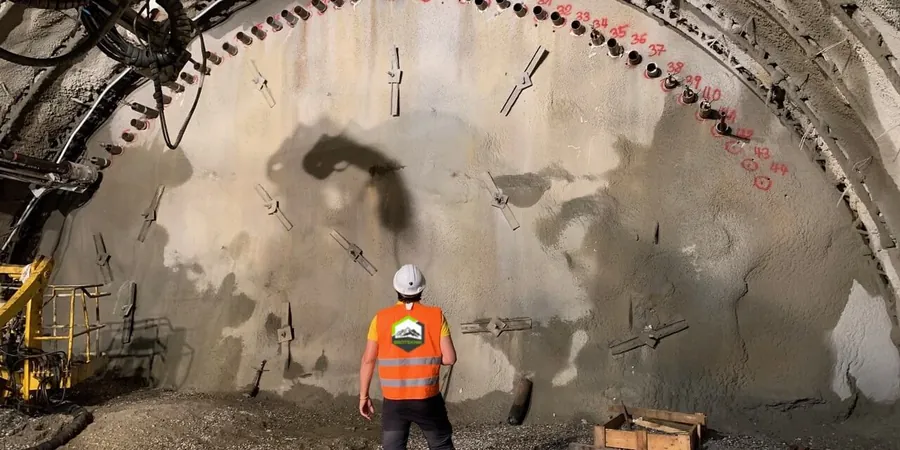
Longueuil grew fast after the Jacques-Cartier Bridge opened in 1930, but much of Vieux-Longueuil sits on a deep Champlain Sea clay deposit that demands respect from any excavation contractor. The soil here holds moisture like a sponge and loses strength quickly when disturbed. Our monitoring program tracks wall deflection, groundwater pressure, and vibration in real time so your crew never works blind. We deploy inclinometer casings, standpipe and vibrating-wire piezometers, and automated total stations linked to threshold alerts. For deeper cuts near the metro tunnel under Rue Saint-Charles, we often combine deep excavation instrumentation with surface settlement pins to protect adjacent century-old triplexes. It is a level of control that turns uncertainty into a managed risk.
In Longueuil's Champlain clay, wall deflection is rarely symmetric — monitoring one side of an excavation is like reading half a book.
Frequently asked questions
How much does excavation monitoring cost for a typical Longueuil townhouse infill project?
For a single-family or townhouse excavation with 3–4 instruments and a 4-week monitoring period, the cost normally falls between CA$1,220 and CA$3,450 depending on depth, access constraints, and the number of adjacent structures requiring crack gauges.
Which instrument is most critical in Longueuil's clay?
The vibrating-wire piezometer gives the earliest warning. Champlain Sea clay generates high excess pore pressure during digging, and a sudden drop can signal imminent failure. Inclinometers tell you how much the wall has already moved, but the piezometer tells you what the soil is about to do.
Do you provide data to the City of Longueuil for permit closure?
Yes. We compile monitoring data into a signed closure report that includes time-history graphs of deflection, pore pressure, and vibration, referenced against the project-specific threshold table. This report is accepted as part of the excavation permit sign-off process.